Industrial Accessories

Essential accessories and components for maintaining optimal performance and efficiency in industrial gas and air systems.

Our Industrial Accessories

Essential components and systems for maintaining clean, efficient industrial operations

Oil Skimmers

(45 Reviews)

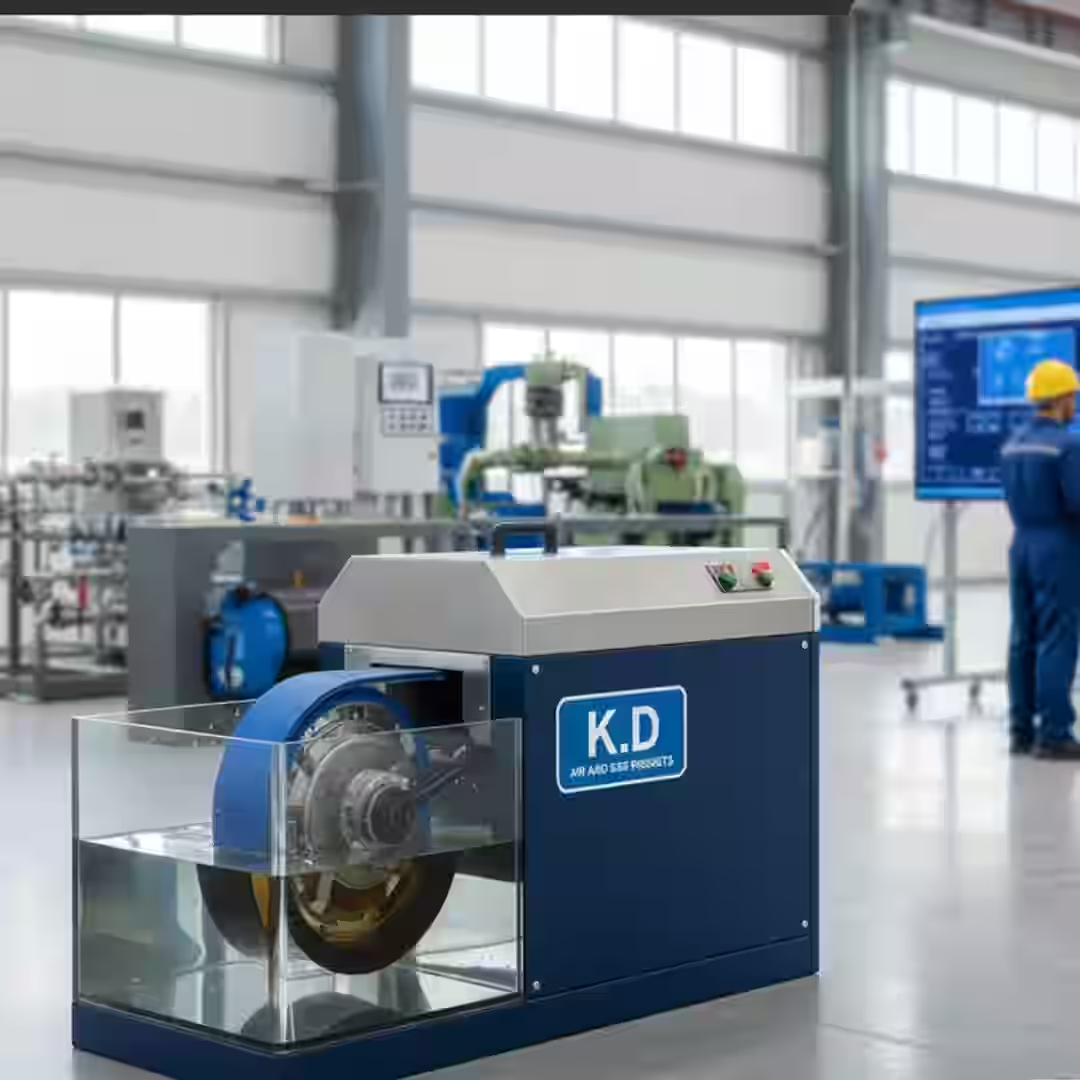
Efficient oil removal systems designed to separate and collect floating oils, fats, and greases from water surfaces in industrial applications, ensuring cleaner water and reduced environmental impact.

Specifications

  • Capacity: 1 - 200 liters/hour
  • Oil Type: All floating oils, fats, greases
  • Belt Width: 50 - 400 mm
  • Motor Power: 0.12 - 1.5 kW
  • Materials: SS304, PP, MS powder coated
  • Voltage: 220V/380V, 50Hz

Applications

Coolant Tanks Wastewater Pits Parts Washers Quenching Tanks Settling Ponds

Key Features

  • Continuous belt or tube-type skimming
  • Automatic wiper blades for oil removal
  • Adjustable collection troughs
  • Corrosion-resistant construction
  • Low maintenance operation
  • Portable and stationary models available
  • Optional oil/water separators

Technical Specifications

Model Capacity (L/hr) Belt Width Motor Power Dimensions (mm) Weight (kg)
OS-50 1-5 50 mm 0.12 kW 400x300x500 8
OS-100 5-20 100 mm 0.25 kW 600x400x600 15
OS-200 20-50 200 mm 0.55 kW 800x500x800 28
OS-300 50-100 300 mm 0.75 kW 1000x600x1000 45
OS-400 100-200 400 mm 1.5 kW 1200x700x1200 65
Standard Features:
  • Stainless steel or polypropylene construction
  • Oil-resistant belts with stainless steel scrapers
  • Adjustable depth for different tank levels
  • Collection container with drain valve
  • Thermally protected motor
  • Powder coated mild steel frame
Optional Accessories:
  • Mounted on castor wheels for mobility
  • Extended belt lengths (up to 5 meters)
  • Explosion-proof motors for hazardous areas
  • Automatic level controllers
  • Oil/water separator units
  • Remote control operation
  • Corrosion-resistant coatings
Types of Oil Skimmers:
Belt Skimmers

Continuous loop belt that picks up oil from water surface. Most common for industrial applications.

Tube Skimmers

Floating tube attracts oil, squeezed through rollers. Ideal for limited space applications.

Disk Skimmers

Rotating disks pick up oil. Suitable for moderate oil volumes and consistent conditions.
Frequently Asked Questions

Common questions about oil skimmers

Oil skimmers work on the principle of surface tension and adhesion to remove floating oils from water surfaces. The main types include:
  • Belt Skimmers: Use a continuous loop belt that passes through the water surface, picking up oil which is then scraped off into a collection container. Most common for industrial applications.
  • Tube Skimmers: Use a floating tube that attracts oil, which is then pulled through rollers to squeeze out the oil. Ideal for limited space applications.
  • Disk Skimmers: Rotating disks pick up oil as they pass through the water surface. Suitable for moderate oil volumes.
  • Rope Mop Skimmers: Use an endless rope that absorbs oil as it passes through the water. Good for irregular surfaces.
  • Weir Skimmers: Adjustable weirs allow oil to flow over into a collection area. Simple design for fixed installations.
Belt skimmers are most common for industrial applications due to their efficiency and continuous operation capability.

Regular maintenance ensures optimal performance of oil skimmers:
  • Daily: Check oil collection container and empty as needed
  • Weekly: Inspect belt/tube for wear and proper tension, clean wiper blades
  • Monthly: Check drive mechanism, lubricate moving parts as needed
  • Quarterly: Inspect electrical connections and motor condition
  • Annually: Complete system inspection, replace worn components
  • As Needed: Replace belts, tubes, wiper blades, or other consumables
Additional maintenance tips:
  • Keep the skimmer area free of debris that could damage the belt
  • Regularly check and clean strainers in the system
  • Monitor motor temperature and amperage draw
  • Keep records of oil removal quantities for maintenance scheduling
  • Follow manufacturer's recommended maintenance schedule

When selecting an oil skimmer, consider these factors:
  • Oil Type: Light or heavy oils, fats, greases, or emulsified oils
  • Volume: Amount of oil to be removed daily/weekly
  • Tank/Pit Size: Dimensions and shape of the containment area
  • Installation: Fixed or portable, indoor or outdoor
  • Operating Environment: Temperature, corrosive conditions, explosive atmospheres
  • Power Availability: Electrical supply type and location
  • Maintenance Access: Ease of access for routine maintenance
  • Budget: Initial cost and operating expenses
General selection guidelines:
  • For light oils: Belt or tube skimmers work well
  • For heavy oils/viscous materials: Belt skimmers with scraper systems
  • For small tanks/limited space: Tube or small belt skimmers
  • For large open areas: Multiple or large belt skimmers
  • For hazardous areas: Explosion-proof models

Oil skimmers provide several important benefits:
  • Environmental Compliance: Helps meet wastewater discharge regulations by removing oils before discharge
  • Cost Savings: Recovers oil for reuse or proper disposal, reducing waste disposal costs
  • Equipment Protection: Prevents oil contamination of pumps, filters, and other equipment
  • Improved Efficiency: Maintains cleaner water for processes like cooling or washing
  • Safety Enhancement: Reduces fire hazards in areas with oil accumulation
  • Reduced Maintenance: Less frequent cleaning of tanks and pits required
  • Resource Recovery: Collected oil can often be recycled or reused
  • Process Improvement: Consistent water quality for manufacturing processes
Additional advantages:
  • Simple operation with minimal supervision
  • Low energy consumption compared to other separation methods
  • Can operate continuously or intermittently as needed
  • Minimal chemical usage (if any) required
  • Adaptable to various tank shapes and sizes