Our Analytical Solutions
Advanced gas analysis and sampling instruments for precise measurement and monitoring
Gas Analytical Instruments
Comprehensive range of gas analyzers and monitoring instruments for measuring oxygen, moisture (dew point), hydrocarbons, carbon dioxide, and other trace gases in industrial processes and environmental applications.
Specifications
- Measurement Types: O₂, H₂O, CO₂, THC, H₂
- O₂ Range: 0-25% / 0-1000 ppm
- Dew Point: -100°C to +20°C
- Accuracy: ±1% of reading
- Response Time: < 10 seconds
- Outputs: 4-20 mA, RS485, Ethernet
Applications
Key Features
- Paramagnetic/Zirconia oxygen analyzers
- Chilled mirror/Aluminum oxide dew point meters
- FID/NDIR hydrocarbon analyzers
- Thermal conductivity hydrogen analyzers
- Multi-gas analysis systems
- Data logging and remote monitoring
Technical Specifications
| Instrument Type | Measurement Range | Accuracy | Response Time | Output | Power |
|---|---|---|---|---|---|
| Paramagnetic O₂ Analyzer | 0-25% / 0-100% | ±1% FS | 7 seconds | 4-20 mA, RS485 | 100-240V AC |
| Zirconia O₂ Analyzer | 0-1000 ppm / 0-25% | ±1% reading | 5 seconds | 4-20 mA, Modbus | 24V DC |
| Chilled Mirror Dew Point | -60°C to +20°C | ±0.2°C | 2 minutes | 4-20 mA, Ethernet | 110-230V AC |
| Aluminum Oxide Hygrometer | -100°C to +20°C | ±2°C | 15 seconds | 4-20 mA | 24V DC |
| NDIR CO₂ Analyzer | 0-5000 ppm / 0-100% | ±2% FS | 10 seconds | 4-20 mA, USB | 100-240V AC |
| FID Hydrocarbon Analyzer | 0-10,000 ppm as CH₄ | ±1% reading | 1 second | 4-20 mA, RS232 | 220V AC |
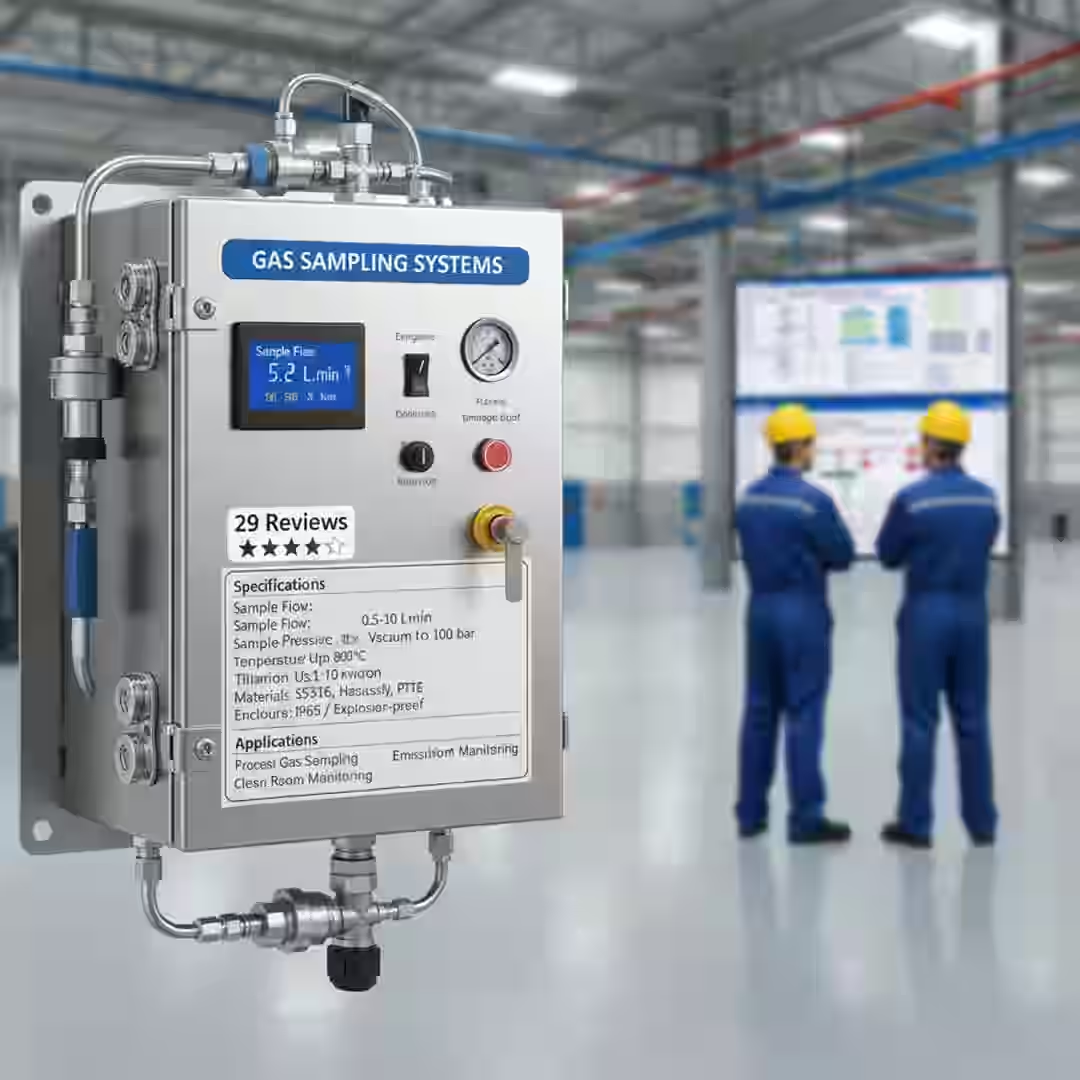
Gas Sampling Systems
Complete gas sampling and conditioning systems designed to extract, condition, and deliver representative gas samples from process streams to analyzers, ensuring accurate and reliable measurement data.
Specifications
- Sample Flow: 0.5 - 10 L/min
- Sample Pressure: Vacuum to 100 bar
- Temperature: Up to 800°C
- Filtration: 0.1 - 10 micron
- Materials: SS316, Hastelloy, PTFE
- Enclosure: IP65 / Explosion-proof
Applications
Key Features
- Heated sampling lines for wet gas applications
- Multi-stage filtration and particulate removal
- Sample conditioning (cooling, pressure regulation)
- Calibration gas injection systems
- Automatic blowback cleaning
- Explosion-proof designs for hazardous areas
- Integrated flow measurement and control
Technical Specifications
| System Type | Sample Conditions | Filtration | Flow Rate | Heating | Enclosure |
|---|---|---|---|---|---|
| Basic Sampling System | Ambient to 150°C, 0-10 bar | 2 micron | 0.5-2 L/min | Not heated | IP65 Panel |
| Heated Sampling System | Up to 250°C, 0-20 bar | 1 micron | 1-5 L/min | 180°C heated line | IP65 Panel |
| High Temperature System | Up to 800°C, 0-50 bar | 0.5 micron ceramic | 2-10 L/min | 400°C heated probe | Explosion-proof |
| Multi-stream System | Ambient to 200°C, 0-30 bar | 0.1 micron | 0.5-3 L/min per stream | 200°C heated | IP65 Cabinet |
| Portable Sampling Kit | Ambient to 100°C, 0-5 bar | 5 micron | 1-3 L/min | Not heated | Carrying Case |
Standard Components Included:
- Sampling probe or extraction fitting
- Heated or unheated sample line
- Particulate filter (primary)
- Coalescing filter (for aerosols)
- Sample pump (diaphragm or rotary vane)
- Flow meter and control valve
- Pressure regulator
- Calibration gas connections